The NGO, with a presence in 80 countries, works hand in hand with its affiliates to deliver urgent aid to refugee camps or wherever severe humanitarian crises erupt. Its close coordination and streamlined logistics enable the implementation and promotion of successful strategies to fight poverty by addressing its root causes. Thanks to its wide-reaching international fundraising campaigns, Oxfam has a high capacity to respond and save lives.
Everyday life in the Western world is flooded with terms such as climate change, environmental crisis, refugee crisis, and economic inequality. Terms that circulate constantly across mainstream media and social networks. Worn down, overused, and diluted by so much exposure, they seem to have lost their meaning.
“People who hear them often think of them as inevitable phenomena, like rain, sunshine, or strong winds. The truth is, we fail to recognize that these are phenomena caused by real people. So much so that we speak of ‘the world’s refugee crises’ as if they were intrinsic to our system, instead of realizing they are crises caused by the system. Or, in everyday language, a severe humanitarian crisis punishing billions of people who must pay the price of a socio-economic order built on actions and values that embody violence, cause wars, destroy nature, and are blatantly unjust,” explains Montserrat Presa Agüero, Fundraiser and Head of Partnerships at Oxfam Intermón.
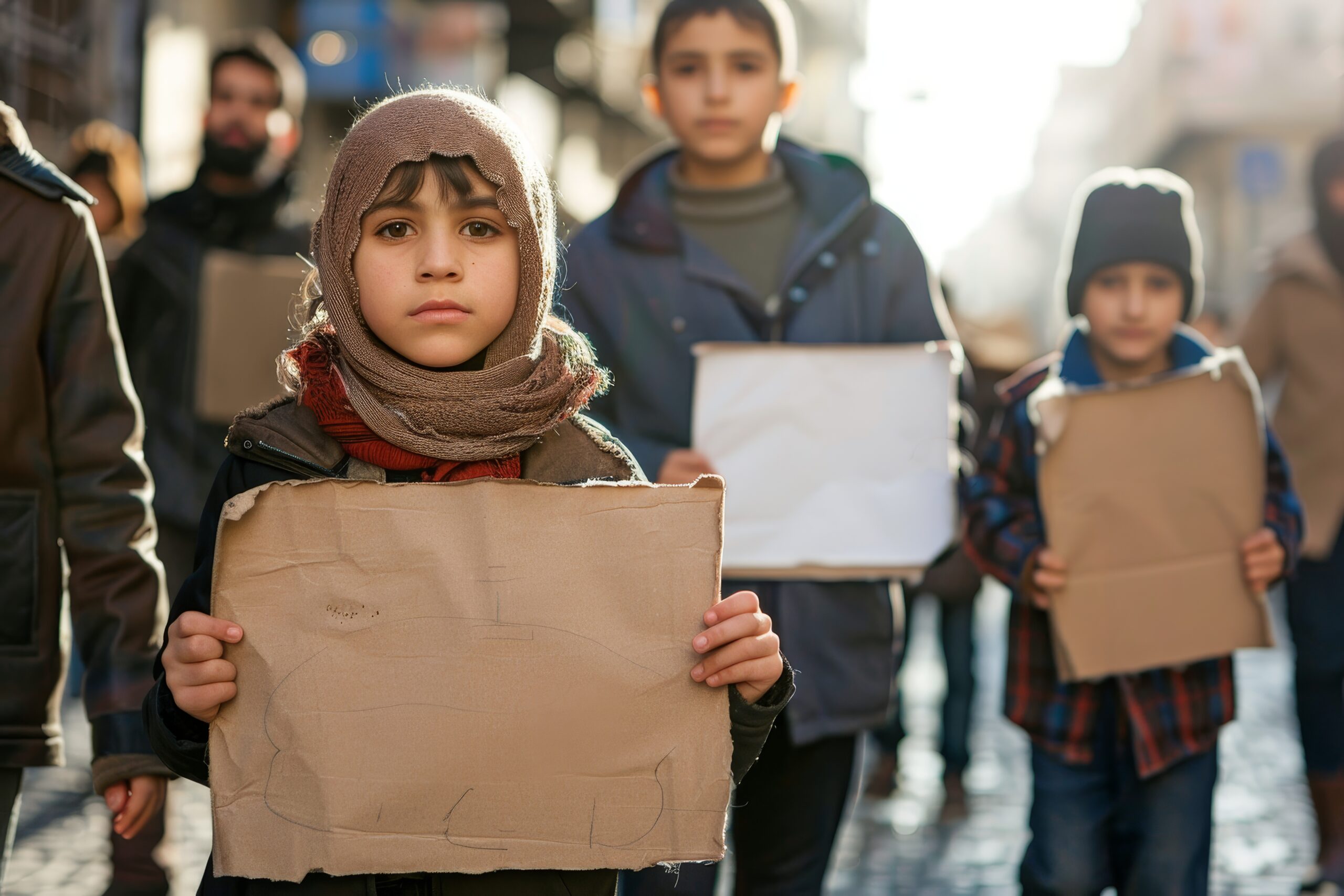
The figures are clear—and certainly alarming. By June 2024, UNHCR had recorded that around 122.6 million people had been displaced from their territories. The causes remain the same as throughout human history: major disruptions to public order, violence, persecution, human rights violations, natural disasters, and now the added consequences of the current climate crisis. This high number reveals that over the last twelve years, the situation has only worsened. Whereas a decade ago 1 in every 114 people worldwide was displaced, today it is 1 in 64. The majority—specifically 87%—of displaced people live in countries with low or middle incomes.
But what would happen if we could break this cycle of degradation?
This question has been answered in concrete terms by Oxfam. Since its founding in 1956, this NGO has worked as a network in more than 80 countries to arrive on time and provide solutions wherever poverty and humanitarian crises are most urgent. How is this achieved? Thanks to the funds collected through the various campaigns developed simultaneously and in coordination across the globe. Oxfam’s goal is ambitious: to end inequality and poverty in the long term.
In 2015, UN Secretary-General Ban Ki-moon stated that humanity, as a global society, now has sufficient financial and technical means to end extreme poverty. Oxfam has a long track record of achievements in this direction, as every crisis where it has intervened has yielded hopeful results.
“In Oxfam’s case, many of us believe this is possible: arriving on time, saving lives, providing answers. It’s not only about being present at the epicenter of the crisis; we also seek to go further and create long-term solutions to eradicate the structural poverty faced by many people and families,” says Montse Presa Agüero.
How does Oxfam manage donations?
Fundraising campaigns are carried out throughout the year. In addition, regular private donations allow for swift responses—both palliative and structural—to the causes of poverty and inequality. Oxfam’s work over its existence has been defined by:
- Acting on the ground immediately: This is key, and means arriving promptly, without delay, to places where human lives are at risk due to humanitarian crises. Delivering concrete, effective aid to people and families who have lost everything, so they can rebuild their present and future once the emergency subsides.
- Coordinated network work: In alignment with local offices deployed in more than 80 countries, aid is managed from the location deemed optimal so that resources (financial support, multidisciplinary assistance staff, and necessary equipment) reach their destination quickly.
- Offering strategic solutions: Wherever necessary, our experts, after assessing the situation, prepare a proposed solution that—through diplomatic channels—reaches the offices where decisions are made. The goal is to ensure the best paths are chosen to resolve the root of a problem in a definitive way.