Sustainability and energy self-sufficiency define the solar “miracle” of Modhera. This marginalized village is the foundation of a pilot project supported by the Government of India in cooperation with the Government of Gujarat. The total investment amounts to approximately US$9.7 million. Since 2022, this modest and once-precarious settlement has become the country’s first net generator of clean energy.
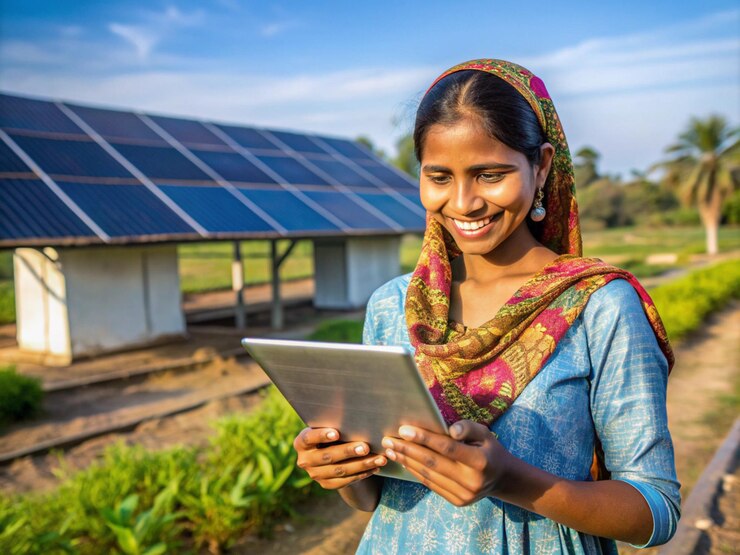
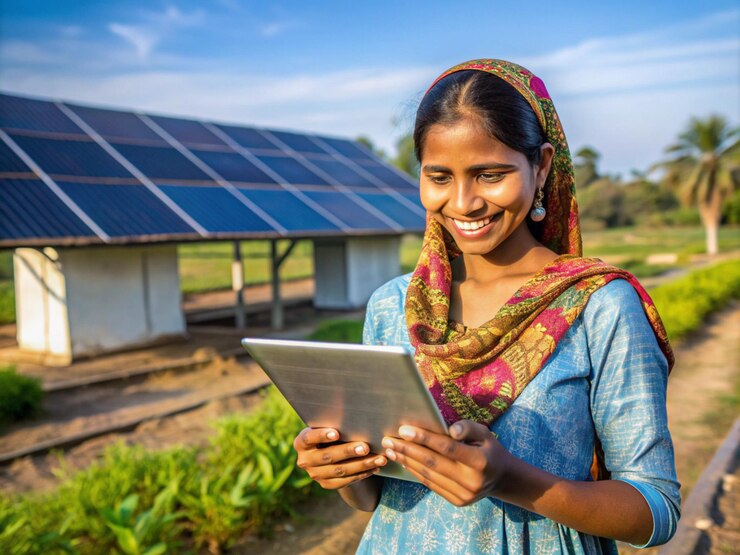
Gadvi Kailashben smiles toward the sun. Her modest orange-toned sari gleams brilliantly, the light reflecting off the solar panels installed on the roof of her home. A 42-year-old widow, she feels fortunate—like nearly all the residents of Modhera, a humble village in Gujarat—whose lives have been radically transformed by solar photovoltaic energy.
Gujarat, India’s westernmost state, stretches along the coast that meets the Arabian Sea, offering postcard landscapes of translucent-sand beaches and golden sunsets. The region is also home to the Pushpavati River, which flows at the foot of the centuries-old Sun Temple, a small architectural jewel dating back to the 11th century that attracts thousands of visitors and houses the solar deity, Surya.
Gadvi believes that the god Surya has much to do with the “miracle” now unfolding in her village—because no one pays for electricity anymore. The government has provided Modhera with solar systems valued at nearly US$10 million, which not only supply free power but also generate income from the surplus. Like her neighbors, Gadvi can store and feed excess electricity back into the grid, earning money from the “sale” of her unused power.
Life Before the “Miracle” of Renewable Energy
“Before 2022, when we didn’t yet have the solar photovoltaic system in our village, paying the electricity bill was difficult,” says Gadvi. “Given my modest income, the monthly cost—around 2,000 rupees—was a heavy burden. But since the installation was placed on my rooftop, my electricity bill has been zero.” As she gestures toward the panels, her golden bangles gleam and chime in the sunlight.
The contrast between the solar panels and the surrounding environment is striking: modest homes, precarious structures, and gleaming panels everywhere—on roofs, terraces, and every vacant plot suitable for installation. “Everything in my home, from the washing machine to the refrigerator, now runs on 100% solar renewable energy. Not a single rupee leaves my pocket for electricity anymore,” says Mrs. Gadvi Kailashben cheerfully.
She attributes this “miracle” to the deity Surya, whose temple lies nearby, along the Pushpavati River. Life had turned upside down for Gadvi after becoming a widow. Her only source of income comes from small-scale farming, which she dedicates entirely to supporting her children. The government’s decision to install a solar system at her home has changed her life, easing her domestic expenses. Her days now unfold with greater peace and renewed hope. “All the extra money I earn from selling electricity is deposited in my bank account. It covers our daily expenses, and I save the rest for my children’s education,” she adds.
Looking to the Future with Hope
Vikalp Bhardwaj, CEO of Gujarat Power Corporation Limited, led the installation of the solar panels that now cover the rooftops, terraces, and open spaces of Modhera’s homes, schools, and health centers. “This is the first village in Gujarat—and in all of India—where even at night, the energy consumed comes from a renewable source: solar photovoltaic power,” said Bhardwaj, who coordinated the project alongside the Government of India.
This pilot project aims to assess the impact of renewable energy in modest rural communities that urgently need economic relief—allowing families to use their income not only for survival but also to improve their quality of life. If the Gujarat project proves successful across all evaluation criteria, the next step will be to replicate it in other villages and rural districts across the country.
“This type of project serves as a model for assessing the positive impact of renewable energy in low-income areas of India—a mirror reflecting what these vulnerable communities can become when they achieve energy self-sufficiency,” added Vikalp Bhardwaj.
A transformation that Mrs. Gadvi Kailashben already senses as she looks at her zeroed-out electricity bill, counts her monthly savings, gazes at her children, and together, plans for a brighter future.