Foreign banks and their multimillion-dollar contributions form the foundation of a far-reaching reform of the country’s waste treatment system. Thanks to the arrival of a total investment of US$187.5 million, Argentina will soon have an integrated and sustainable system for recycling its waste.
Once again, international financial institutions have demonstrated strong support for Argentina—a crucial backing at a time when the country requires significant funds to implement foundational improvements such as urban waste management. With this major financial injection, Argentina will be able, in the medium term, to launch a program aimed at optimizing solid waste management in urban areas and achieving comprehensive environmental sanitation. Both initiatives seek to align with the paradigm that experts deem essential for modern environmental stewardship: the circular economy.
The Inter-American Development Bank (IDB) recently transferred US$70 million to Argentina. This amount adds to a substantial US$50 million contribution from the European Investment Bank (EIB). Additionally, the French Development Agency (AFD) has committed to providing approximately US$57.5 million.
As a result, Argentina’s Ministry of Environment will receive a total of US$187.5 million to launch an ambitious project to overhaul a system that has proven obsolete. According to ministry sources, the first stage will focus on developing, constructing, and executing the GIRSU Plan (Integrated Management of Urban Solid Waste).
This initiative will unfold in successive phases, beginning with the development of infrastructure projects; the acquisition of key machinery to ensure efficient waste management; multiple rounds of technical consultancy to provide expert guidance; and training programs for personnel in the operation of the new systems and equipment.
Integrating Waste Management into the Circular Economy
The goal of the GIRSU Plan is to implement a qualitative leap in Argentina’s urban waste treatment system, promoting state-of-the-art waste management. Currently, Argentina produces approximately 1.15 kilograms of waste per person per day. Experts estimate that this amounts to over 40,000 tons of waste generated daily—roughly 18 million tons per year (equivalent to one ton every two seconds).
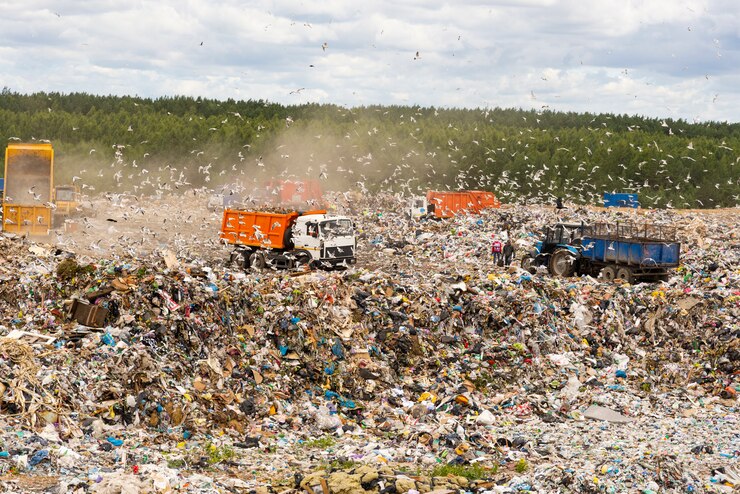
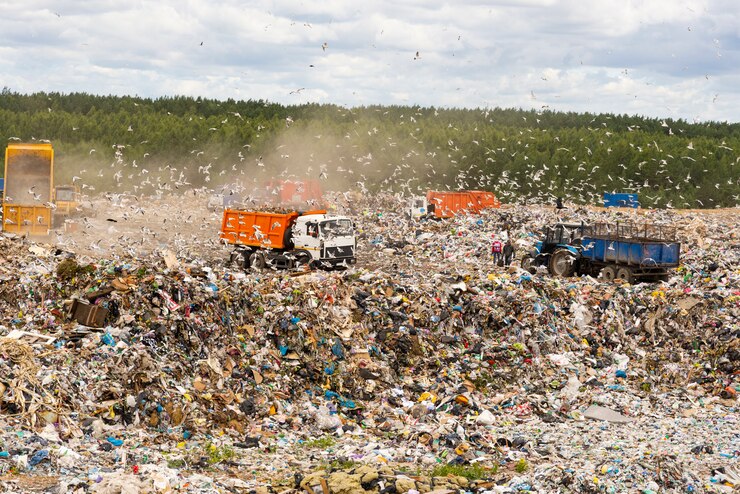
The initiative aims for proper waste management while promoting social inclusion and improvement. Under the GIRSU framework, this translates into a program that not only modernizes waste systems but also fosters social advancement. A central goal is comprehensive environmental sanitation, which includes progressively reducing the negative impact of open-air dumps—sites that pose severe risks to nearby communities.
GIRSU will also promote educational and awareness programs focused on identifying and separating waste at its source, as well as improving collection, recovery, transport, and recycling processes.
In broad terms, the GIRSU Plan outlines the following steps toward completion:
- Construction of new infrastructure suited to the challenges of sustainable waste management across Argentina, including the creation of environmental centers for controlled waste treatment.
- Gradual acquisition of machinery and equipment to optimize all stages of urban solid waste management nationwide. The plan also aims to improve the working conditions of recycling workers across the country.
- Comprehensive remediation of areas currently occupied by open-air dumps, ensuring these sites are permanently decommissioned.
- Educational and awareness campaigns in schools, municipalities, and universities to promote timely recycling, reuse, and proper waste valorization at the source—so that, in later stages, materials can be transformed into inputs for new production cycles.
- Technical assistance and policy support for the development and enactment of legislation and local regulations to guarantee the long-term sustainability of these initiatives—through differentiated waste collection systems, social and labor inclusion programs, and robust education and awareness efforts.
With this financial backing and structured plan, Argentina seeks not only to modernize its waste management system but also to position itself within a global framework of circular, inclusive, and sustainable environmental development.