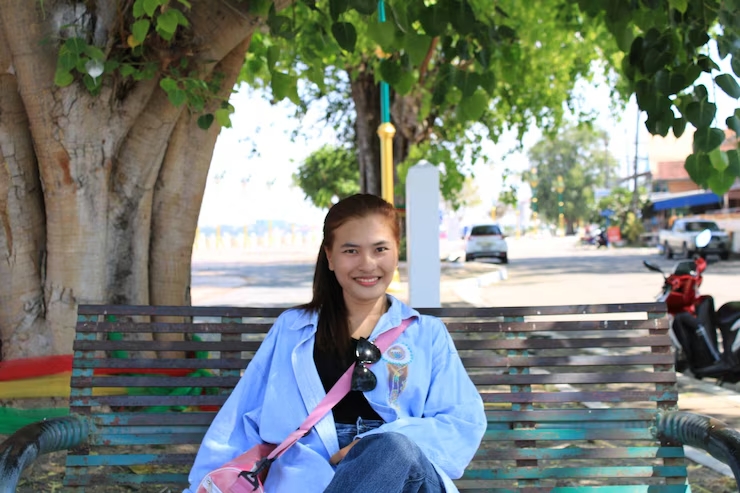
Thanks to an intense fundraising campaign, young Burmese doctor Aye Nyein Thu managed in 2021 to build a rudimentary hospital to treat those wounded in her country’s fratricidal war. A brave and audacious initiative that has saved thousands of lives so far.
Myanmar today is a land of conflict, a land of death. This Southeast Asian nation of roughly 60 million inhabitants has endured, for many years now, an internal fratricidal struggle that shows no sign of ending. Slowly and silently, Myanmar bleeds—largely out of sight of a world absorbed in its own daily battles.
In February of this year, the UN raised its voice on behalf of those who have none in Myanmar: children, the elderly, and women caught in the spiral of war and involuntarily placed on the front lines. Children who should be playing or attending school are injured. Elderly people who should be enjoying rest are deprived of everything. Women must care for entire families while lacking food, water, shelter—and often while grieving children, parents, or grandparents who are wounded or dead.
In March 2025, Myanmar fell into even deeper despair. A 7.7-magnitude earthquake near Mandalay—followed by a 6.4 aftershock—left thousands dead, regardless of age, political alignment or social status. Although the Burmese are accustomed to frequent tremors, no one saw this coming. The nation rests on four interacting tectonic plates (Eurasian, Indian, Sunda and Burmese), whose geological dynamics routinely shake the land. In this landscape of devastation, a small light emerged from the shadows: Aye Nyein Thu.
An Angel in the Midst of Hell
Physically small and delicate, Aye Nyein Thu’s glasses and stethoscope reveal her nature—gentle, meticulous, soft-spoken. Her apparent fragility, however, stands in stark contrast to the courage she has shown in her 30 years of life, especially since 2020, when she graduated from medical school.
With no time to rest after completing her studies, she faced the moment to put her training into practice. In February 2021, Myanmar was turned upside down: a brutal coup d’état in Mandalay overthrew the democratically elected National League for Democracy. The Tatmadaw, Myanmar’s military, seized power, plunging the country into chaos, violence, and death.
In the midst of gunfire that day in Mandalay, Aye Nyein Thu stepped into the improvised battlefield alongside other medical professionals. They treated the wounded, providing first aid and preventing fatal hemorrhages in countless civilians and protesters. Later that year, the young doctor made another bold decision: she launched a fundraising campaign to build a field hospital wherever it was most needed.
The location soon became clear. She traveled to Mindat, a municipality in western Myanmar overwhelmed by wounded victims of the ongoing conflict. The situation was dire: hundreds of injured people and only two doctors available.
A Field Hospital by the Side of the Road
With the donations she received, the young doctor performed what many consider a miracle. Using a modest structure, she set up a functional field hospital equipped with a makeshift operating room, an oximeter, and essential supplies. She created a medical center serving the people of Mindat, nearby villages, and internally displaced families living in refugee camps around the region.
Since then, Aye Nyein Thu has become the guardian angel of Myanmar’s wounded—children, adults and families unable to reach a proper medical center. She continues to risk her life daily in service of the most vulnerable. The BBC recognized her in 2023 as one of the 100 most influential and inspiring women in the world.