The Zoom Foundation has brought hope to the primates inhabiting the mountainous region of the Virunga Massif in Africa. The Italian NGO, composed of top-tier scientists and currently in charge of the Zoom Biopark in Turin, has made a multimillion-euro contribution that will fund the creation of primate rescue centers in this critical area of the continent.
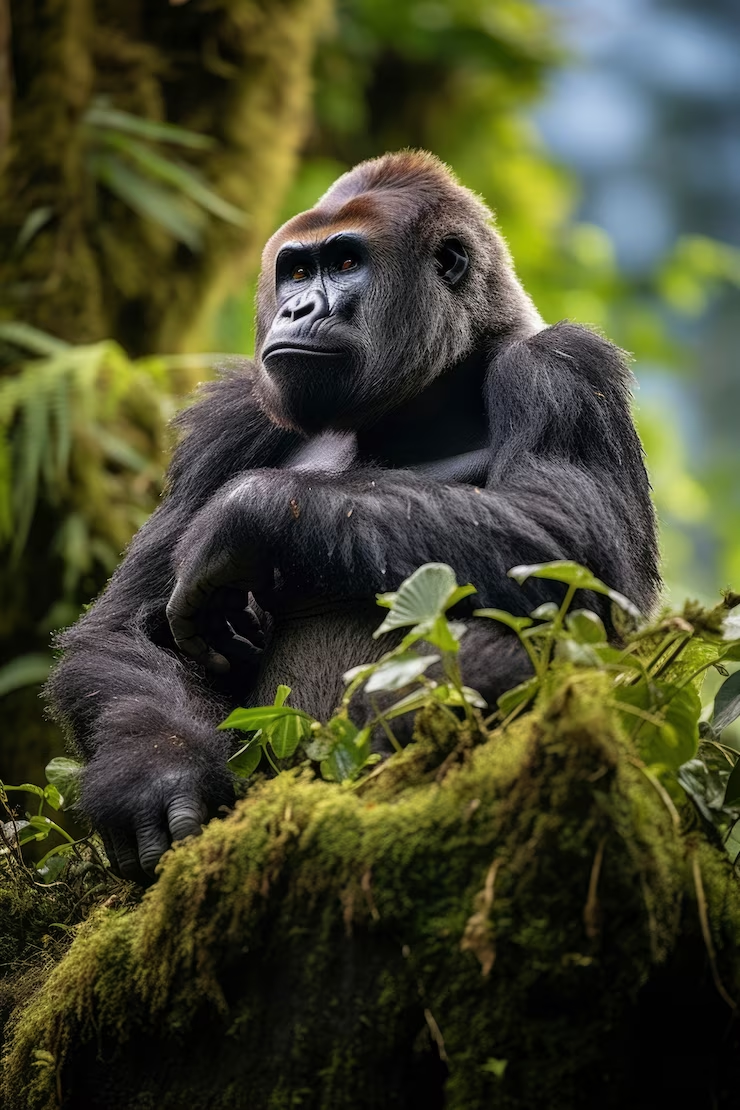
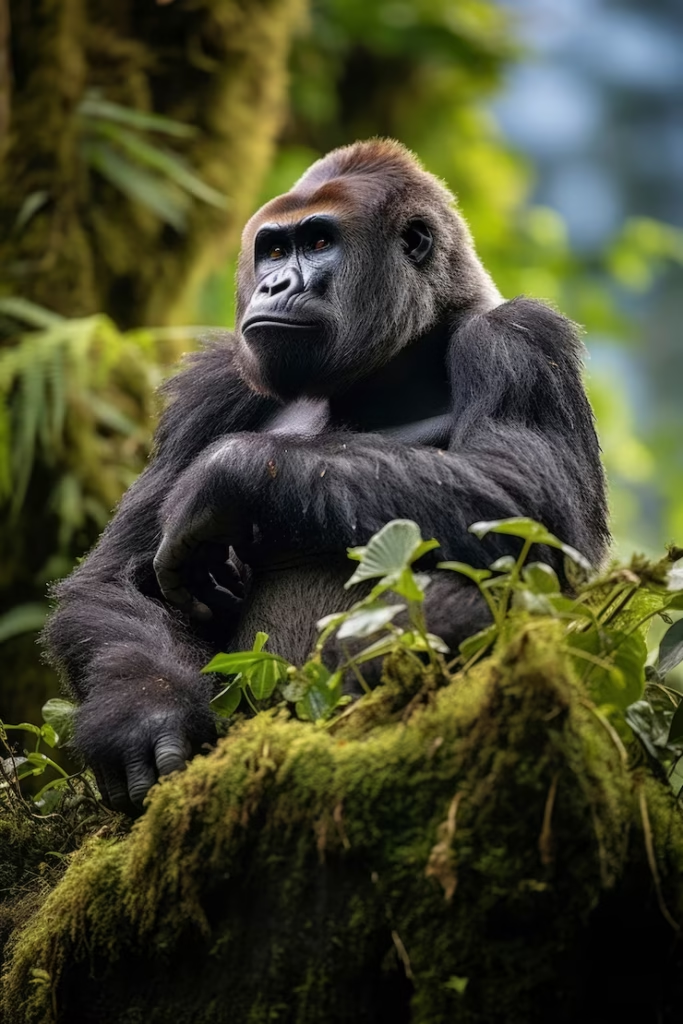
“Mountain gorillas,” explains Dr. Valentina Izaje, Scientific Coordinator of the Zoom Foundation, “are astonishing, fascinating primates. Similar in height to humans, their most distinctive features are their ebony-dark skin and small, coal-colored eyes with an unparalleled expressive depth. Their noses are also quite unique—broad, with large nostrils. An adult can weigh more than 200 kilos and stand up to one meter eighty tall. King Kong made the species famous on Hollywood screens, but in real life, across the African lands of Congo, Rwanda, and Uganda, this colossus stands as lonely as it is vulnerable in its fight for survival. In the wild, their number barely exceeds 1,100 individuals, divided between the two remaining populations of the species living in the Virunga Mountains,” the expert explains.
Despite the enormous challenges the species currently faces, not all news is grim for mountain gorilla populations. The Zoom Foundation’s multimillion-dollar donations have joined the efforts of African governmental authorities and conservation experts, meaning the fate of the species is not yet sealed.
Recent data gathered in the Virunga Mountains (2024) paint an encouraging picture. The numbers show a positive recovery trend: from 625 individuals in 1998 to 1,064 today. Due to this significant and hopeful increase—despite ongoing threats—the International Union for Conservation of Nature (IUCN) decided in 2018 to reclassify the mountain gorilla as “endangered” rather than “critically endangered.”
The Greatest Threats Facing the Mountain Gorilla
The mountain gorilla, also known as Gorilla beringei beringei, is considered the largest primate still inhabiting African soil and surviving on our planet. This true titan of Africa primarily lives in high-altitude regions, hence its distinctive “mountain” designation. Its fur is darker, denser, and thicker than that of other gorilla species—an evolutionary adaptation that allows it to withstand the cold and incessant rain typical of its mountain habitat.
The two wild populations residing in the volcanic mountain range that forms the Virunga chain have faced severe threats since the mid-twentieth century. Among the most lethal are deaths caused by poaching, large-scale deforestation, and the degradation or loss of their natural habitat. Furthermore, contact with humans has exposed the species to infectious diseases, while civil wars in the region have taken a devastating toll.
This path—once seeming irreversible—was halted just in time through the coordinated work of expert conservation teams and crucial government support. Now, the cooperation of the Zoom Foundation and its multimillion-euro donation arrives at a pivotal moment to strengthen mountain gorilla recovery efforts. New conservation strategies and field initiatives can now be implemented, including the long-delayed construction of two primate rescue centers that had been postponed due to lack of funding.
Action on the Ground
These rescue centers will function as field hospitals within the Virunga Mountains, where conservation teams will provide intensive veterinary care and treat respiratory ailments that commonly affect these primates. Additional monitoring posts will also be established for patrol teams and volunteers to detect and remove traps and snares. These are often set by local residents to catch small animals but frequently ensnare young gorillas instead.
Undoubtedly, securing financial support from organizations dedicated to the well-being of critically endangered species—such as the Zoom Foundation—is vital in shaping the future of these vulnerable wild populations. Their survival and quality of life depend largely on the goodwill and generosity of individuals whose contributions, when placed in capable hands, become powerful instruments of change.