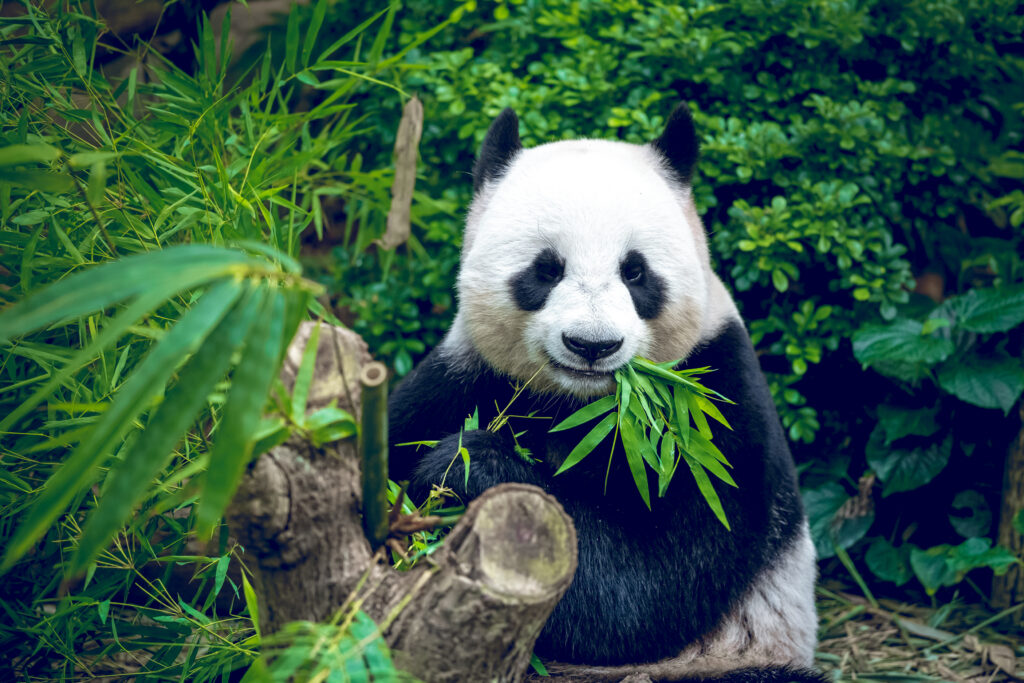
David Rubenstein, a prominent American philanthropist, is the main donor supporting the conservation of the species. Giant pandas, today’s emblem of the most fragile and vulnerable species, are native to central China. Currently, it is estimated that only 1,864 giant pandas live in the wild in their natural habitat, while another 600 live in breeding centers and zoos around the world.
The Minshan, Qionglai, Qinling, Liangshan, Xiaoxiangling, and Daxiangling ranges are vast mountainous areas stretching with natural majesty across Chinese territory. There, the climate provides the ideal conditions for the flourishing of conifer forests, bamboo, and pandas. Commonly regarded as a tree, bamboo is, in fact, a plant—and for pandas, it is their delight, their main and favorite food.
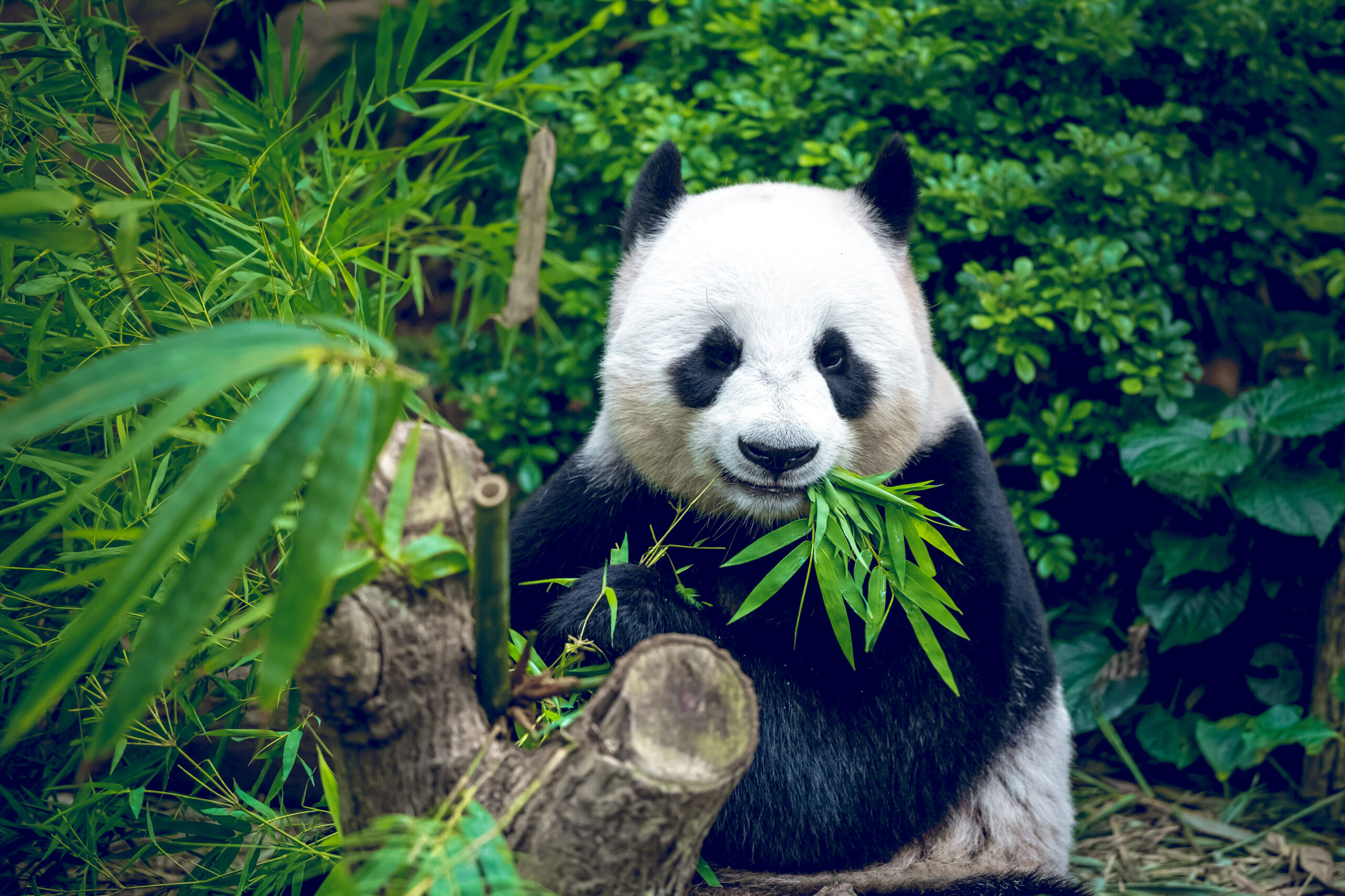
In the wild, within these tall and dense forests rising from 1,200 to 3,400 meters above sea level, nearly 1,900 pandas are estimated to live freely. These endearing creatures, taxonomically classified as carnivores, are today, in the wild or in captivity, almost entirely herbivores (99%). Being carnivores brings complexities and challenges, as their digestive systems cannot properly process bamboo pulp. This makes feeding a simple but endless task: an exhausting daily routine of chewing bamboo stalks to consume between 12 and 38 kilograms, which takes about 14 hours each day. That is why pandas are almost always captured on camera or video in their long, uninterrupted jaw exercise—absorbed in their task, peaceful, and harmless.
This animal, whose conservation status is listed as vulnerable, frequently drinks melted snow or water from streams descending the mountain slopes. In captivity, such as with the pandas in the program of the Smithsonian’s National Zoo and Conservation Biology Institute (NZCBI), their diet is more varied. In addition to bamboo rations, these bears are offered other specially prepared dishes. As if they were guests at a five-star hotel, pandas in captivity can enjoy rice porridge, sugarcane stalks and shoots, and a selection of special, nutritious, high-protein cookies rich in fiber, made with apple, sweet potato, and carrot.
Funds to Promote the Well-Being of a Species as Unique as It Is Adorable
David M. Rubenstein, lawyer, financial analyst, co-founder, and co-chairman of The Carlyle Group, has been a key factor in the recovery of panda populations. His latest donation in 2024 amounted to $10 million, directed toward the Smithsonian’s NZCBI $25 million fundraising campaign to advance its giant panda conservation program.
“The invaluable support that David Rubenstein has provided to NZCBI has been the driving force behind the expansion of our giant panda conservation program. It is vital for the future of this wonderful species and also for the future of its natural habitat,” stated Brandie Smith, head of the program. She added, regarding this strong commitment: “David fully understands that the arduous task of saving giant pandas is complex and requires large investments. This essential mission goes far beyond the efforts of one person, one conservation-minded organization, or even one nation. It is an integrated task that requires the intervention of multidisciplinary teams. For this reason, we are deeply grateful for his collaboration and his strong commitment to preserving the biodiversity of our planet.”
With this latest donation, David Rubenstein’s contributions to sustaining the Smithsonian’s giant panda conservation program, launched in 2011, now total $22 million. Over the course of the program, Rubenstein’s donations have been essential in supporting the Smithsonian team’s efforts. They have also been vital in funding Chinese collaborators and experts who have focused on developing new techniques and conducting in-depth research to improve the quality of life of captive pandas. Beyond that, they have worked to expand knowledge for the species’ conservation in the wild. This is a challenge of great magnitude, in a context where climate change looms over the panda and its bamboo forests as a major threat that, sooner rather than later, could put the species in definitive jeopardy.