
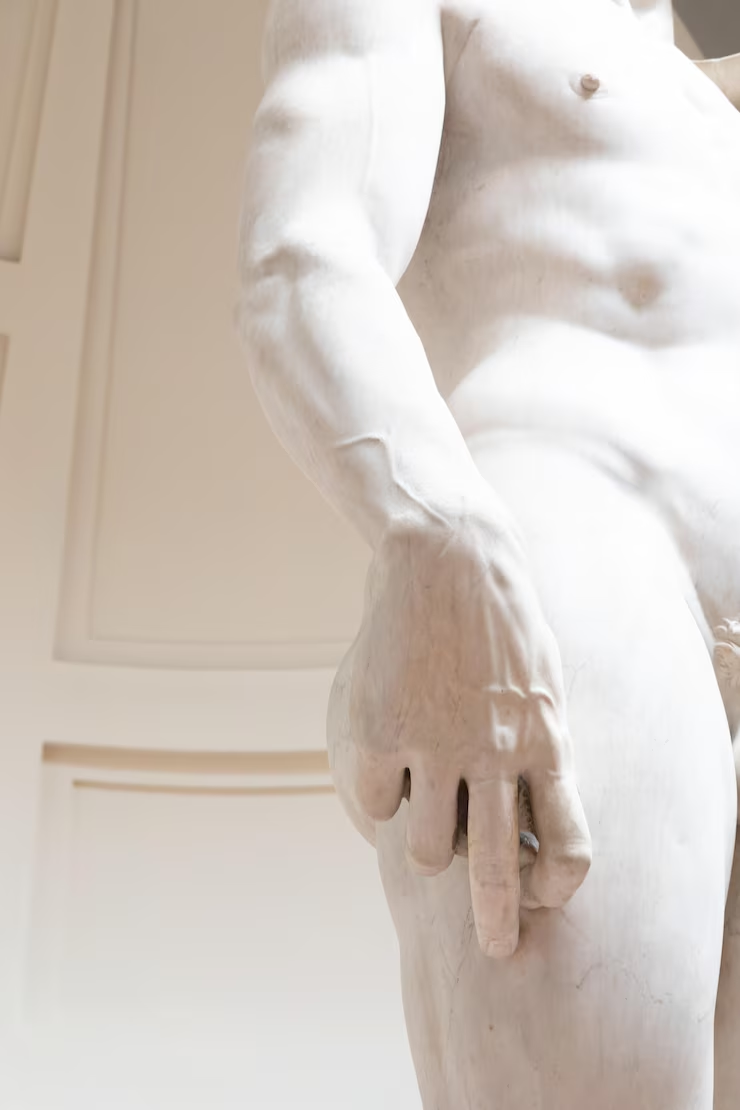
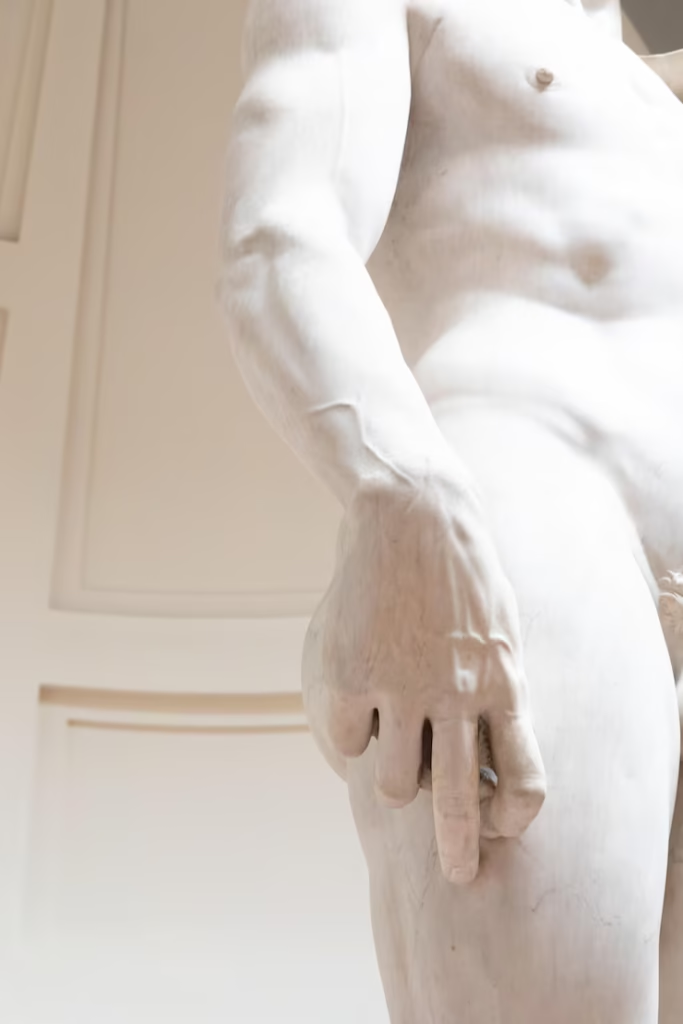
On August 16, 1501, Michelangelo Buonarroti received the official commission to sculpt David. The project had originally been started by an artist named Rossellino, who for unknown reasons left the block unfinished. One month later, supported by the patronage of the Duomo—the Episcopal See of Florence—Michelangelo began what would become two uninterrupted years of work devoted to shaping one of his most imposing and captivating sculptures.
The transition from the 15th to the 16th century brought a torrent of events to Florence. In 1494, a violent uprising was unleashed against the Medici family, who held political authority in the Tuscan city. Their weakening opened the door for King Charles VIII of France to advance mercilessly through the Kingdom of Naples. Amid this political vulnerability, Girolamo Savonarola, confessor to Lorenzo de’ Medici, assumed leadership of the new government, initiating persecution against those he deemed heretical or vain.
Savonarola—a Dominican friar and eloquent preacher—introduced a ritual of renunciation in Florence known as the “Bonfire of the Vanities.” Around a great fire, he urged the wealthiest citizens to destroy their luxury possessions, both literally and symbolically, encouraging detachment from material attachments.
In this context of austerity, Michelangelo was entrusted with a monumental task: carving, from a five-ton block of marble more than five meters tall, the figure of the most beloved king of the Old Testament—King David. The sculpture’s purpose was straightforward: to adorn the Piazza della Signoria.
Essential patronage for the history of universal art
With financial support from the Bishopric of Florence, Michelangelo was able to dedicate two full years exclusively to crafting David. This essential patronage allowed the artist to work with uninterrupted focus, free from economic pressure that might have hindered the creation of such a monumental piece.
On September 8, 1504—the feast of the Nativity of the Virgin Mary—Florence unveiled the 5.17-meter, five-ton statue in the center of the Piazza della Signoria. The sculpture portrayed the young shepherd of Israel who would later become king—David.
David stood in its original location for nearly four centuries. In 1873, to ensure its preservation, authorities transferred the sculpture to a new indoor space. Since then, the Galleria dell’Accademia in Florence has safeguarded the masterpiece, while a full-scale white marble replica stands today in the Piazza della Signoria, marking the exact spot where the original once stood.
David, the King of Israel Who Defeated Goliath
The biblical account describes Goliath—the Philistines’ most feared warrior—who besieged the people of Israel for forty days. No one had faced him without fleeing, let alone defeated him. Believed to have exceeded three meters in height, the soldier from Gath appeared gigantic. His military triumphs were celebrated as the pride of the Philistines. He was considered invincible—until the day he confronted David.
“Who among you dares to challenge me—who will defeat me?” shouted Goliath to the Israelite camp. Silence fell. Then David—a thin youth, a shepherd untrained for war—stepped forward and accepted the challenge. He tried on the heavy armor but removed it quickly, realizing it restricted his movement. As a shepherd, he had learned to defend his flock with a sling, and he advanced armed only with it, five stones and his unwavering faith.
He faced the giant, who laughed at him. David prepared his sling, prayed briefly, and released the stone like a bolt of fire. It struck Goliath squarely in the forehead, bringing him down instantly. The giant fell, and the threat vanished forever.