
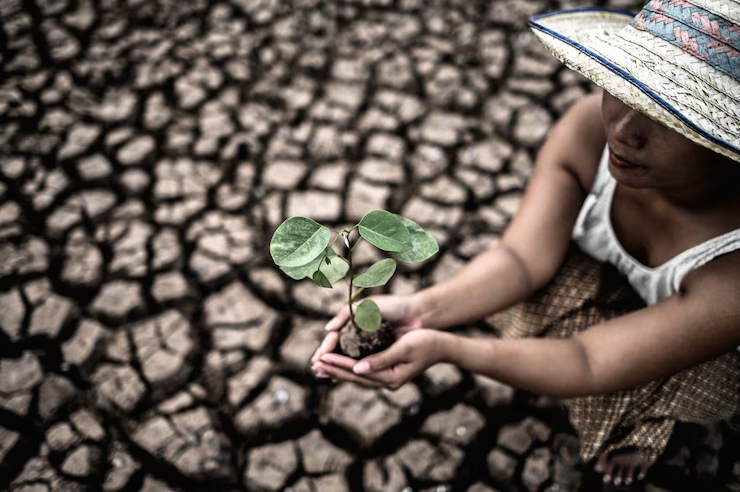
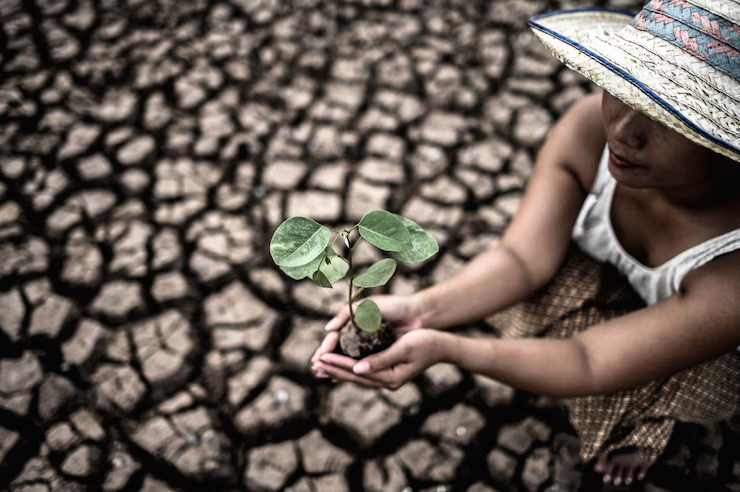
The drought caused by El Niño has been devastating for Guatemala over the past four years, bringing severe losses from coffee crop failures and a general decline in agricultural production. Most small-scale farmers have lost everything—or almost everything. With between 75% and 100% of crops destroyed, nutrition among vulnerable populations has deteriorated severely. Thanks to donations and Action Against Hunger’s programs, a light of hope is beginning to emerge.
María Domínguez, 57, embodies the traits of her land: resilient, intense, hopeful. She continues to trust in the future and works tirelessly, just as she has since childhood, in the village of El Guayabo, where she was born and raised. This enclave, defined by extreme temperatures, lies in the heart of Guatemalan soil and is one of the regions most affected by climate impacts. It forms part of what is known as the Dry Corridor—a geographic arc where the sun strikes with lethal force, scorching an already fragile land. This occurs most intensely between April and August, a period when the most courageous seedlings wither before blossoming due to a lack of water. Rainfall is scarce and may not return until August. Seasonal hunger has arrived and will dominate the next five months.
This reality, observed in certain areas of Latin America, offers a preview of what may occur on a much larger scale in the future. Yet many families have chosen resilience over migration, supported by essential assistance from NGOs such as Action Against Hunger—an organization dedicated to addressing the causes and consequences of hunger wherever needed. For María Domínguez, her eight children and grandchildren, this support is indispensable.
María is a strong, indigenous woman whose life has never been easy. The mother of ten children, she lost two to hunger-related illness in infancy and later lost her husband. Still, she refused to let hardship define her. She moved to the coast to work in sugarcane fields and supported her family through years of labor. Today, now back in her hometown, her children help sustain her so she can rest more as age begins to weigh on her. Even so, María remains active—caring for her grandchildren and cooking for her extended household, which she likens to feeding a battalion. With pride, she smiles: “Now that the hardest season has begun, my children and grandchildren eat the same thing every day—our corn tortillas. And I say this sincerely: I’ve tasted hundreds of tortillas in my life, but mine are the best.” She laughs while rinsing the maize kernels.
Donations and Strategic Aid During Critical Months
María Domínguez’s story reflects the extreme food insecurity experienced across the Dry Corridor. For this reason, Action Against Hunger has expanded its presence in the region, deploying the full capacity of its programs to address this urgent and long-term humanitarian challenge.
With a strong organizational structure of 8,500 workers and around 600 volunteers across more than 45 countries, the NGO is equipped to respond to Guatemala’s seasonal hunger crisis. The Action Against Hunger International Network—operating from London, Madrid, Paris, Berlin, New York, Rome and Montreal—coordinates donation-based programs built around four core pillars of intervention: food security, nutrition, health, and water and sanitation.
This comprehensive action plan is crucial in a country marked by profound social challenges. Limited educational opportunities, drug trafficking, organized crime, and poor access to basic sanitation and safe water intensify during the seasonal hunger cycle in the Dry Corridor. Income distribution is highly unequal, and more than half of households cannot guarantee basic food for their children due to extremely low earnings.
Action Against Hunger provides essential support in a country where more than 58% of Indigenous children suffer from some form of malnutrition—a figure that remains alarming even when considering the nationwide rate of 47%. In practice, this means that one in two Guatemalan children under five experiences chronic malnutrition. This is one of the highest rates in the region, in a context where access to basic medical care is extremely limited.
For these reasons, sustaining the donation program for the Dry Corridor remains a top priority in Action Against Hunger’s annual agenda. It is the first step in a series of broader initiatives focused on social support and long-term resilience in communities confronting both climate change and structural inequalities.