The International Fund for Agricultural Development (IFAD) is leading development programs aimed at empowering and revitalizing rural communities. Its mission is to strengthen agricultural populations across the planet, turning them into key players in the fight against the challenges posed by climate change.
The village of Khampan, like nearly 80% of impoverished households in the Lao People’s Democratic Republic, relies entirely on agriculture—on what the earth provides. It is a subsistence economy, but one that is beginning to grow. Located in the country’s northeast, Khampan is known for its bold, fast-flowing rivers, ideal for kayaking, as well as for its promising agricultural production. Among its most celebrated crops are the vibrant and flavorful scallions, or green onions, a staple ingredient in kitchens throughout Laos.
However, climate change has hit Khampan hard: rainfall cycles have become erratic and scarce, leaving farmers facing the anguish of watching their fields wither and die from lack of water. The new reality of drought has tested the community’s resilience—but rather than breaking them, it has made them stronger.
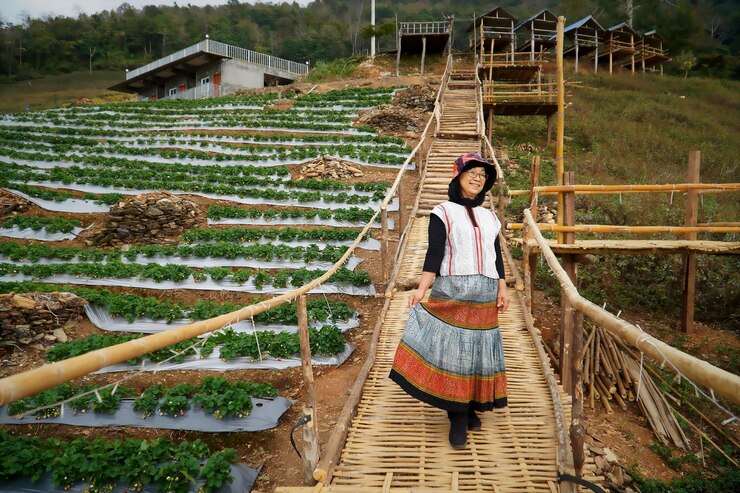
Sao, a young farmer, and her husband make their living from a small scallion plot. In her hand, she proudly holds a long, firm green stalk that reveals its crisp white rings and fresh aroma when broken. Smiling as she looks over her thriving plants, she recalls difficult times: “The land suddenly dried up. The fields went completely dark. The sun burned everything,” she says, reflecting on the hard years they left behind. But that was before what the locals now call “the great miracle.”
New Green Shoots
For the poor farmers of Laos, these “miracles” have faces and names—those of the technicians behind IFAD’s agricultural assistance programs in Khampan. This initiative is proving, with resounding success, that when modern technology is combined with traditional farming methods, it is possible to achieve abundant and sustainable harvests.
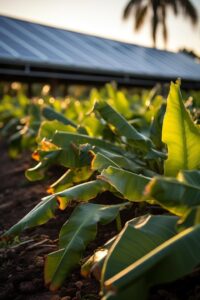
Concrete support arrived in the form of nearly 16 million kip (about USD 780) in funding, distributed through IFAD’s Partnership for Irrigation Systems and Small-Scale Agricultural Marketing Project. Guided by technical experts, Khampan’s farmers invested the funds in an innovative solar-powered water supply system, which has allowed Sao’s family to expand their cultivated area from 0.25 hectares to 0.40 hectares—a remarkable achievement for a family engaged in subsistence farming.
This solar irrigation system has transformed their fields and restored their hope. Crop quality has improved dramatically, ensuring a reliable food supply and a steady income.
“We Just Want to Live From Our Own Land”
Sao takes pride in her determination, her willingness to learn, and her persistence. “We only want to live from our own land, not be forced to migrate,” she says with quiet resolve. Today, her reality has changed: her scallions grow quickly, ready for harvest every 45 days, and are sold to a trader who delivers them to the capital, Vientiane.
For the first time, Sao and her family earn enough to reinvest in their small farm and save for the future. “Thanks to the invaluable support of IFAD, through the Partnership for Irrigation Systems and Small-Scale Agricultural Marketing Project, my life and my family’s life have been completely transformed,” she says. “Now I have plans to expand our fields and make good use of our savings.”
The story of Khampan is not only one of agricultural renewal—it is a testament to how targeted rural investment, powered by sustainable technology and community determination, can turn fragile economies into resilient ones and sow the seeds of a better future for generations to come.