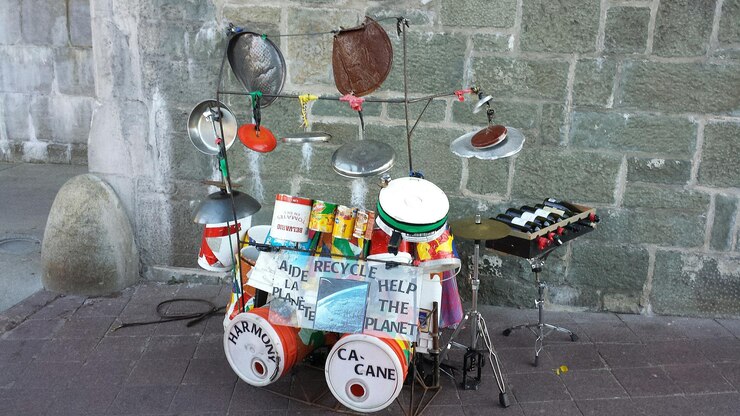
In 2014, a donation of 100 million guaraníes made possible the construction of a music school in one of the most vulnerable areas of Paraguay’s capital, Asunción. Thanks to this contribution, the Recycled Orchestra of Cateura was able to continue shaping futures and transforming the lives of countless children—children who traded their days spent in the country’s largest landfill for music lessons and international tours.
“The funds from Paraguay’s National Congress came at just the right time. The kids needed a place of their own—a proper space to rehearse, to feel at home, and to practice like any orchestra worthy of the name,” says Favio Chávez, the joyful director of what has been called the most incredible orchestra in the world: the Recycled Orchestra of Cateura.
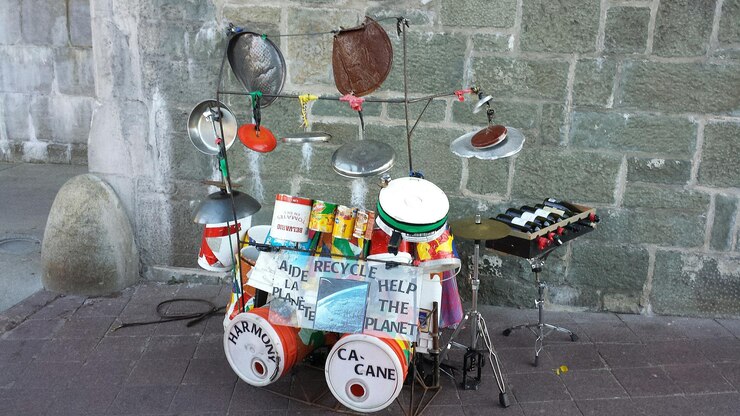
Cateura is Paraguay’s largest garbage dump—a vast mountain of refuse that paradoxically gave birth to a miracle of creativity and hope. Out of screws, cans, bottle caps, scraps of wood, sticks, and every imaginable discarded object, a new kind of orchestra was born. Saxophones, flutes, violins, guitars, and cellos emerged from the ingenuity and love of people who, despite having little, poured their talent, knowledge, and a touch of madness into creating an artistic alternative for the children who once spent their days wandering the landfill.
The Cateura dump, established over thirty years ago on the outskirts of Asunción, remains Paraguay’s largest urban waste site. It is also a dangerous place, prone to disease and accidents. For many children and young people from nearby informal settlements, it is where they play, spend their free time, or even work—sorting through trash to earn a living.
“We give songs back to a world that throws away garbage.”
In 2002, Paraguayan musician Luis Szarán launched Sonidos de la Tierra (Sounds of the Earth), a project designed to bring music to the country’s most impoverished communities—offering hope, joy, and new melodies to brighten daily life. His idea was simple but transformative: to create free music schools.
At the same time, Favio Chávez, also a musician and environmental technician, was running a recycling program at the Cateura landfill. One day, he had an audacious idea: to transform the children of Cateura into professional musicians. He approached Szarán with a proposal—to give music lessons to the landfill’s children and youth, offering them not only education but a second chance at life. The question remained: where would they get the instruments?
The answer came naturally—and powerfully—from the landfill itself. In Cateura, it’s common to see houses built from recycled materials, sturdy and often surprisingly original. Toys, furniture, and everyday tools are routinely crafted from waste. So it wasn’t far-fetched to imagine instruments made from trash.
A Luthier with a Mission
Help arrived in the form of Nicolás Gómez, a luthier and professional recycler whose skills proved nothing short of providential. Under his guidance, violins, violas, flutes, double basses, trumpets, saxophones, drums, and countless percussion instruments came to life. From the shadows of the landfill, a door to the future opened—and the impossible was born.
In 2008, amid joy and disbelief, the Recycled Orchestra of Cateura officially came into existence. The first students—children aged 11 to 25, most of them sons and grandsons of landfill workers—embraced the music with passion. Since then, the orchestra has grown and professionalized, touring the world and captivating audiences everywhere.
Today, these young musicians perform an impressive repertoire ranging from Vivaldi, Beethoven, and Mozart to Frank Sinatra and The Beatles. Their talents have graced stages across continents, including a defining moment in 2014 when they opened for the legendary rock band Metallica before thousands of fans.
Despite their global recognition, the young members of the Cateura Orchestra remain grounded in their mission: to ensure that more children from Paraguay’s marginalized neighborhoods can discover music—and, through it, find their dreams.