The protection and reintroduction program for young California condors into their natural habitat in the mountains of Baja California is being celebrated worldwide for its remarkably high success rate. The initiative relies on the financial support and assistance of a consortium led by the renewable energy company EDF Renewables and seven partner firms, which together sustain this invaluable effort aimed at restoring a symbolic species in a region where EDF Renewables currently operates major wind farms.
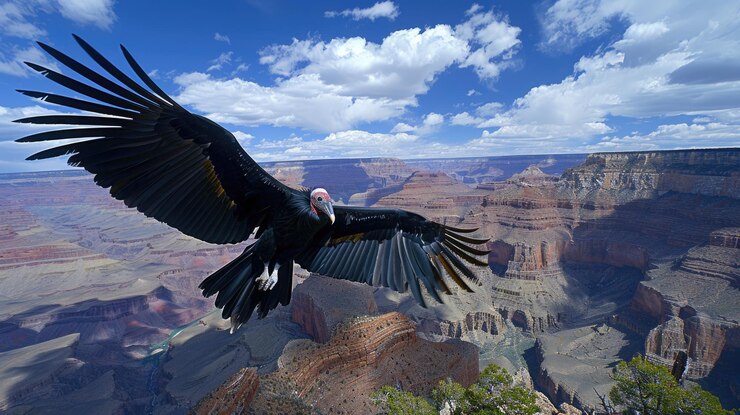
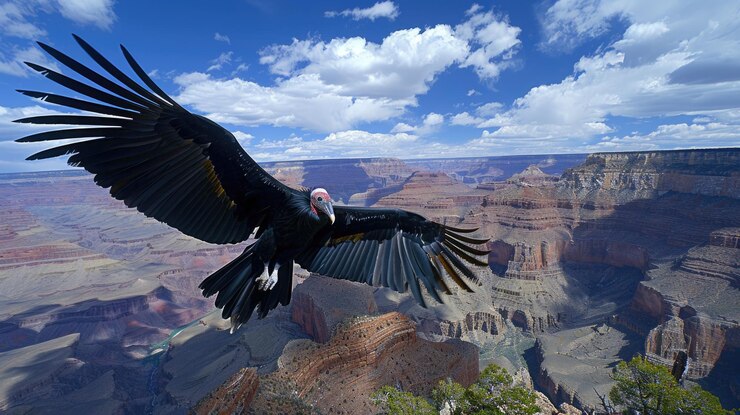
In full flight, untamed and with its wings open to the wind, the California condor reaches an astonishing wingspan of nearly three meters of pure splendor. Its flight is unique—no other bird can imitate it—as the condor reveals all its majesty, rising as the natural emperor of the skies and the landscape. Its kingdom lies among the peaks, clouds, and valleys stretching south of Utah and over northern Arizona, an area that includes the Grand Canyon. There, where this magnificent bird—the largest in North America—rightfully reigns and plays an irreplaceable ecological role, seeing it soar once again is almost a miracle.
Across this vast and arid geography, biologists and conservation experts passionately strive to bring the species back and shape a new miracle: the resurgence of the California condor. This time, it is an effort born from the union of science and the invaluable financial support of EDF Renewables and a group of strategic partners committed to the most urgent environmental causes. Time is pressing in this immense landscape, as there are only about 200 specimens left in their natural habitat; even counting the roughly 180 individuals living in captivity worldwide, their total population barely reaches 400.
“I am eager to see the condors flying high again, crossing these skies that belong to them, and striding with the full strength of their nearly 11 kilograms across this land of canyons, valleys, and deserts that are theirs. This species, as noble as it is majestic, is a unique natural emblem of these landscapes. Condors are their signature, their deepest mark of identity—or, to put it more poetically, this species is the jewel, the most precious natural treasure of North America,” says Caty Porras, the young and enthusiastic director of the California Condor Reintroduction Program.
Donations That Make the Miracle Possible for the California Condor
Today, California condors face severe threats as multiple dangers converge to shorten their chances of survival. Among them is the increasing loss of natural habitats due to urban expansion. Human encroachment has forced the condors to retreat, reducing their range and severely limiting their ability to find shelter and adequate food sources. In addition, California condors have been decimated by lead poisoning. Because they feed on animal carcasses—many of which have been killed with lead bullets—the condors ingest carrion dangerously contaminated with this highly toxic material, leading to fatal poisoning.
Fortunately, tireless work has been carried out to preserve and protect the present and future of the California condor. EDF Renewables—a subsidiary focused on the generation of clean, renewable energy—has been at the forefront of this mission. Through strategic partnerships with seven major companies, it launched the Wind Energy Condor Action Team (WECAT) project. This initiative, in turn, joined efforts with the U.S. Fish & Wildlife Service (USFWS) to prevent fatalities and injuries caused by wind farms operating in the condor’s natural range.
This collective effort by EDF Renewables and its partners successfully complements the ongoing California Condor Reintroduction Program, a binational collaboration between Mexico and the United States that has already proven highly effective. In Mexico—where, to the country’s deep sorrow, the species had been considered extinct since 1939—a ray of hope has reappeared through its successful recovery. The National Commission of Protected Natural Areas of Mexico (CONANP) recently announced that around 40 new young condors, bred in captivity and later released, now soar in all their splendor over the valleys and skies of the Mexican Sierra. An excellent piece of news for the world—for those who love the California condor in particular, and for those who believe that every living being on the planet has a unique and irreplaceable role to fulfill.