
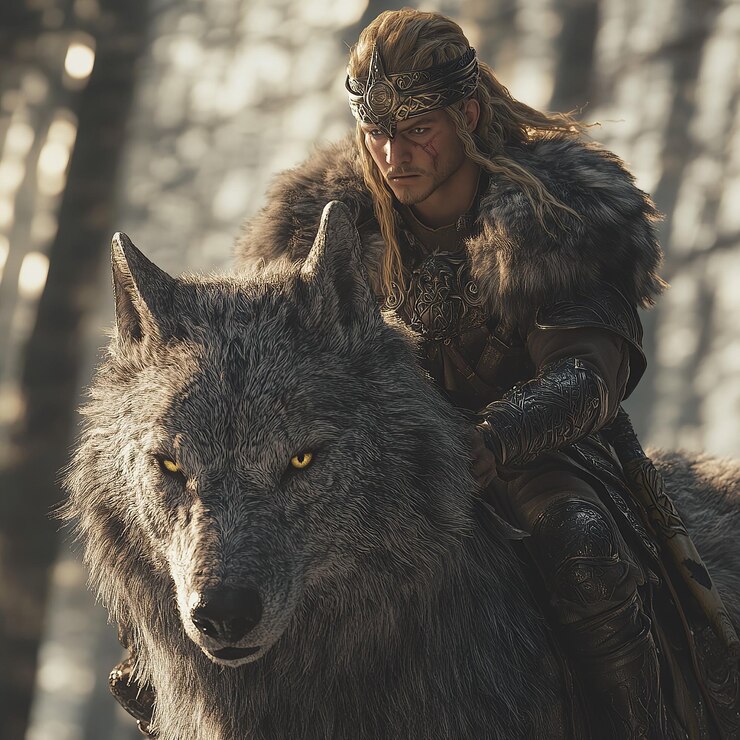
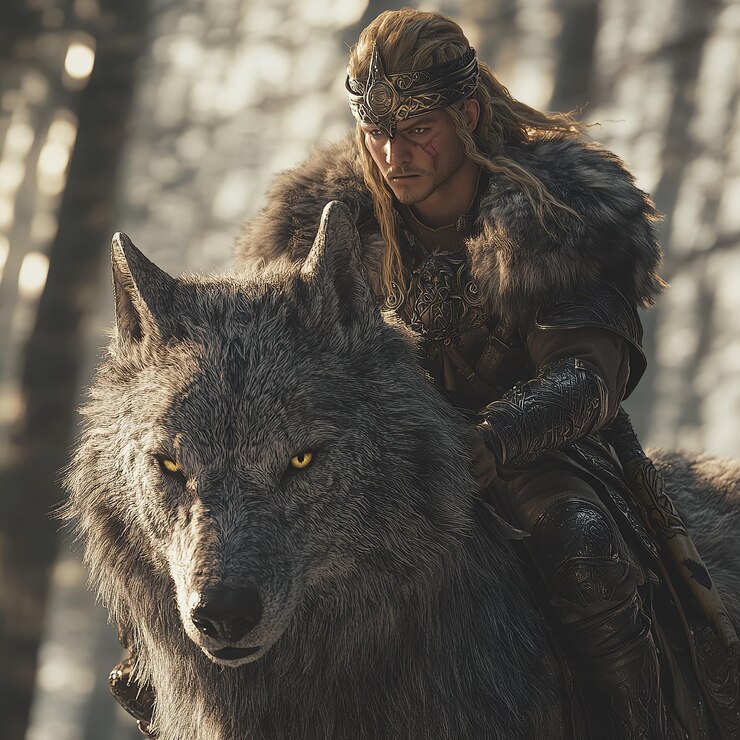
The so-called “dire wolf” is a type of wolf that went extinct 10,000 years ago and gained fame thanks to the series Game of Thrones.
They came into the world howling, trembling, and snow-white. These “miracle wolves”—Rómulo, Remo, and Khaleesi—are three dire wolf or giant wolf pups, a species that went extinct more than 12,500 years ago but has now come back to life in them.
Thanks to the boldness and confidence behind the research carried out by eminent biologists and geneticists, the company Colossal Biosciences claims, without hesitation, to have achieved a supreme milestone: reviving this colossal wolf, known as Canis dirus. This key step in the history of animal genetics stands as a paradigm, as scientists explain it could represent hope for many species that may not withstand the deadly advance of climate change in the future.
The scourge of rising global temperatures is already having a powerful impact on nature and straining ecosystems, and in this context, scientists predict the situation will only worsen. Indeed, forecasts are far from encouraging, pointing to the near possibility of a mass extinction of species if not halted in time. Yet, even if this occurs, the birth of the three dire wolf pups opens a door of hope: many species that fail to survive climate change and go extinct might one day be brought back to life.
A Species Straight Out of a Movie
The three genetically modified wolves bear an astonishing resemblance to the “direwolves,” the species featured in the series Game of Thrones. With their colossal size and imposing strength, the direwolf became the absolute emblem of the Stark family in HBO’s fiction.
This breakthrough was made possible thanks to research and million-dollar investment by the American genetic engineering and biotechnology company Colossal Biosciences. The company has achieved the seemingly impossible: after some 13,000 years, three specimens of this wolf type have reappeared in the world. The adorable and long-awaited pups, named Rómulo, Remo, and Khaleesi by the team, arrived to crown the researchers’ efforts.
The pups, born in October 2024 thanks to painstaking genetic modifications using DNA collected from fossils, were carried by two ordinary dogs. Scientists extracted stem cells from gray wolf blood, then modified 14 genes before introducing the nuclei of these cells into egg cells previously emptied of their genetic material. In an initial stage, the resulting embryos were grown in Colossal Genetics’ laboratory before being implanted into the dogs. Thus, technically, they are not true dire wolves, but rather a simulation of the species reconstructed from the genome of the extinct animal.
Global Impact of the News
Harvard geneticist George Church and entrepreneur Ben Lamm, who founded Colossal Genetics in 2021, stated that the birth of the “dire wolf” pups is “a clear and auspicious breakthrough for all humanity, for science, and for the history of conservation,” as this technology has potential applications for the preservation of currently endangered species.
In line with this, the company announced to the international press that it is making rapid progress in new research involving genetically modified rodents. The goal is for future litters to carry traits of the woolly mammoth, another species that went extinct thousands of years ago. In this project, dubbed the “Colossal Woolly Mouse,” the CRISPR technique was used to insert several genetic traits of the extinct animal into the genome of the experimental mice. As a result, the rodents obtained in the first trials developed thick orange fur resembling that of the extinct mammal.
Colossal Biosciences’ scientific leadership emphasized that their research is focusing on the recovery of three extinct species: the Tasmanian tiger, the woolly mammoth, and the dodo bird. Just three of the thousands of species that have disappeared throughout Earth’s history, but which now have a genuine chance to “be reborn.”