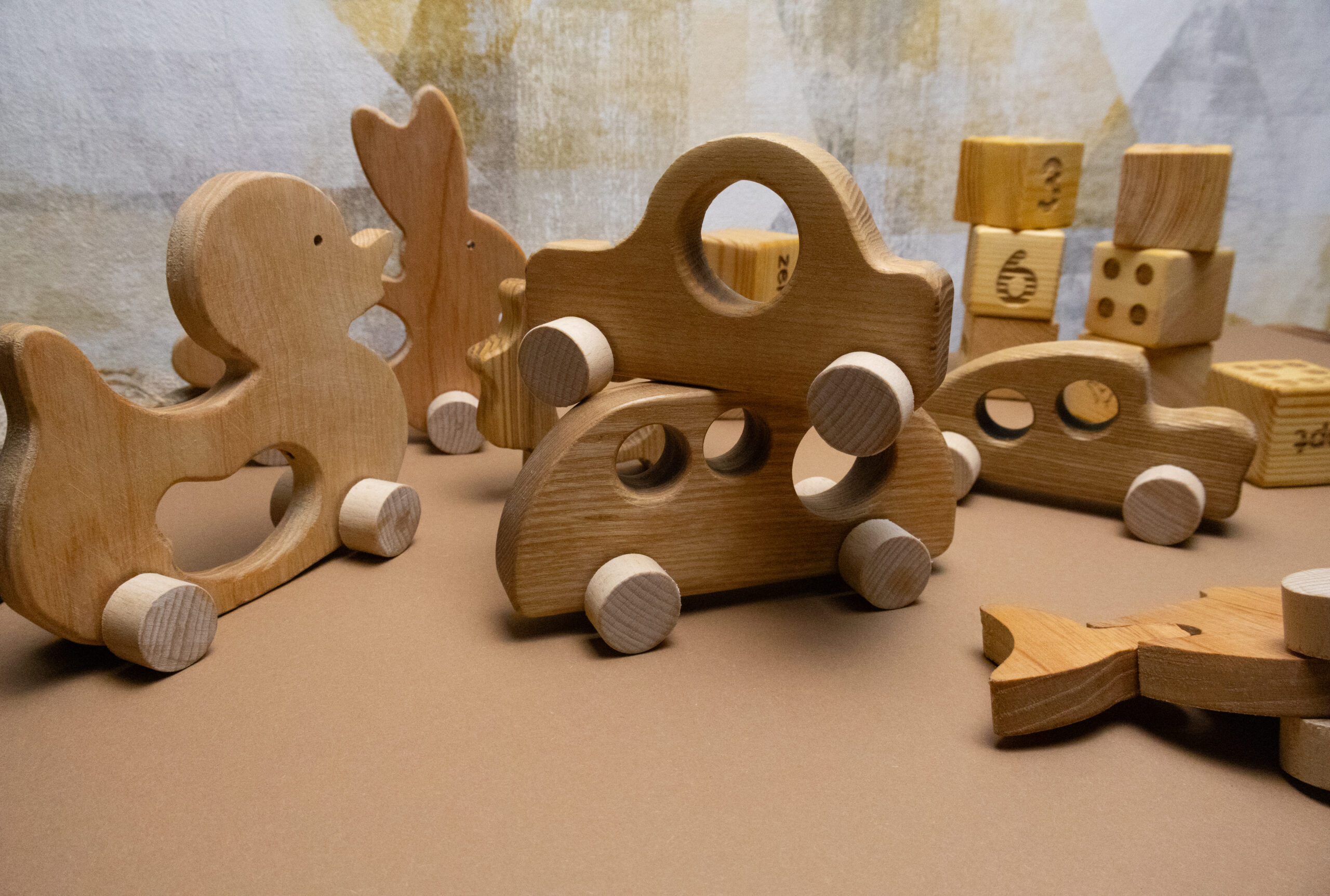
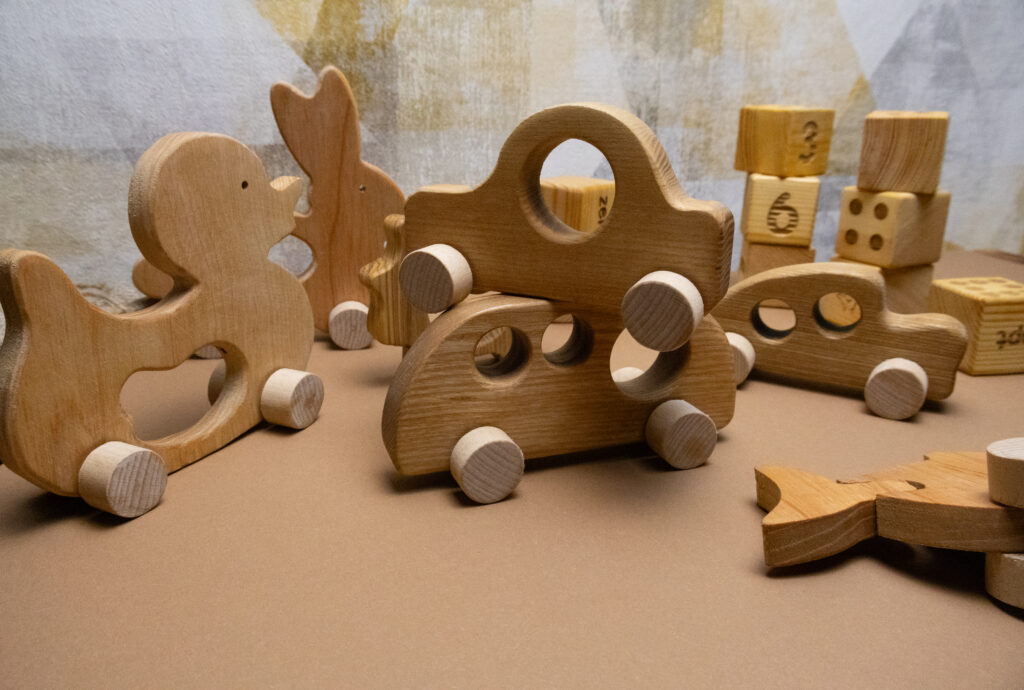
Moy is a migrant who, after fleeing Venezuela, managed to found her own business: Lúdicos Ecológicos. This was possible thanks to the programs of the United Nations Refugee Agency, which, through strategic donations, enabled her to launch her project producing toys made from reforested wood.
Founded in 1640, Nuestra Señora Santa María de la Candelaria de Capiatá—commonly known as Capiatá—has become the new home for Moy and her family in Paraguay. After leaving her homeland, in this quiet southwestern Paraguayan city of 240,000 inhabitants, Moy felt the desire to start over. The traumatic aftermath of violence, the lack of healthcare, political chaos, and economic hardship are not easy to overcome or forget. But in Paraguay, the horizon once again began to shine for Moy and her family. Through her business, a workshop where she manufactures sustainable toys based on the Montessori method, and with the invaluable support of UNHCR, Moy has turned her new source of income into a creative, integrative, and inspiring experience.
“One never thinks of leaving one’s homeland, of abandoning one’s country,” Moy recounts with sorrow. The reality is that she and her husband had to travel what felt like an endless road to reach safety. Saying goodbye to the beauty of her homeland, she says, meant leaving part of herself behind, dying a little inside, and for her family, it meant indefinitely pausing unique moments they once enjoyed together, such as trips to Angel Falls. This imposing and magnificent waterfall—the tallest in the world—is a thread of water cascading a thousand meters from a towering cliff, leaving anyone who contemplates it breathless. Today, the family longs to see it once again.
Yet the situation was urgent: “Being able to give my children a better future, to allow them to go outside without dying at the hands of senseless violence. Having my children grow up today in the peace of a home and a country is the most important thing.” With these words, Moy explains the reasons that compelled her to take great risks, leave Venezuela, and start from scratch. She affirms that now, both she and her family feel safe. From that peace and tranquility—conquered with courage—she found a path to embrace the new and rebuild her life. And such is her gratitude that she sought a way to give back and contribute meaningfully to the community that welcomed her.
Key UNHCR Donations to Open New Paths
Thanks to the technical support provided by UNHCR’s social programs in Paraguay, Moy and her family were able to take the decisive step of launching their business. At Lúdicos Ecológicos, they began by making small wooden figures of Venezuela’s iconic animals, and once settled in Paraguay, they researched and incorporated the country’s most representative local species. Over time, people began asking them for religious images—“Please, could you make me a little Virgin of Caacupé, or a little Virgin of the Mystical Rose,” neighbors requested. They also added educational puzzles and children’s games based on Montessori principles—pieces designed to stimulate gross and fine motor skills during childhood or to help develop balance. Through her research, Moy even created an innovative teaching method for syllabic reading. She insists: “With my system, they always learn,” she says with a smile.
But the beginnings were not easy: “We slept and worked with the family in the same shed. My daughter began to develop respiratory problems. The family doctor clearly told us that unless our housing situation changed, her condition could worsen,” she recalls. Knocking on the doors of the organization Semillas para la Democracia gave them an important first step, a temporary solution. Some time later, through her entrepreneurship, came a decisive award. Granted by the School of Migrant and Refugee Women Entrepreneurs, the family managed to set up a permanent workshop, acquire more tools, and increase their stock.
Today, Moy’s impact extends far beyond her workshop. She explains that her home “always has its doors open.” There, she has sheltered and guided many other migrants and refugees, helping them connect with effective channels of support such as Semillas. She now also teaches reading, supports comprehensive educational processes, and leads a WhatsApp group with more than 400 entrepreneurs from the city. “In this WhatsApp space, the goal is to foster a network aimed at putting the circular economy into motion,” she says. “This space is crucial and valuable for those who don’t know how to sell online.”
Today, stories like Moy’s and her family’s stand as examples of resilience and bear witness to how much can be achieved, to a great extent, thanks to the support made possible by donations channeled through UNHCR programs.